Warehousing and shipment preparation Design concept
Al Soor Trading
A Kuwaiti distributor workspace connecting item location, quantity, parcel packing and carrier handoff review.
We designed Al Soor Trading for a Shuwaikh distributor supplying home products and packaging to local stores. The project follows work from shelf to packing station: what to pick, where to find it and how to review quantities, parcels and recipient before handoff. Operational detail takes priority over an attractive diagram that cannot answer a worker's questions.
Client in the design study
Al Soor Trading
Shuwaikh Industrial, Kuwait
Project brief
A design study for a fictional Kuwaiti homeware-and-packaging distributor controlling picking, packing and carrier handoff.
Design scope
- Arabic identity and shelf-connected picking
- Quantity, parcel and label review
- Packing and handoff manifest with recipient, owner and time
01 / The project challenge
The project challenge
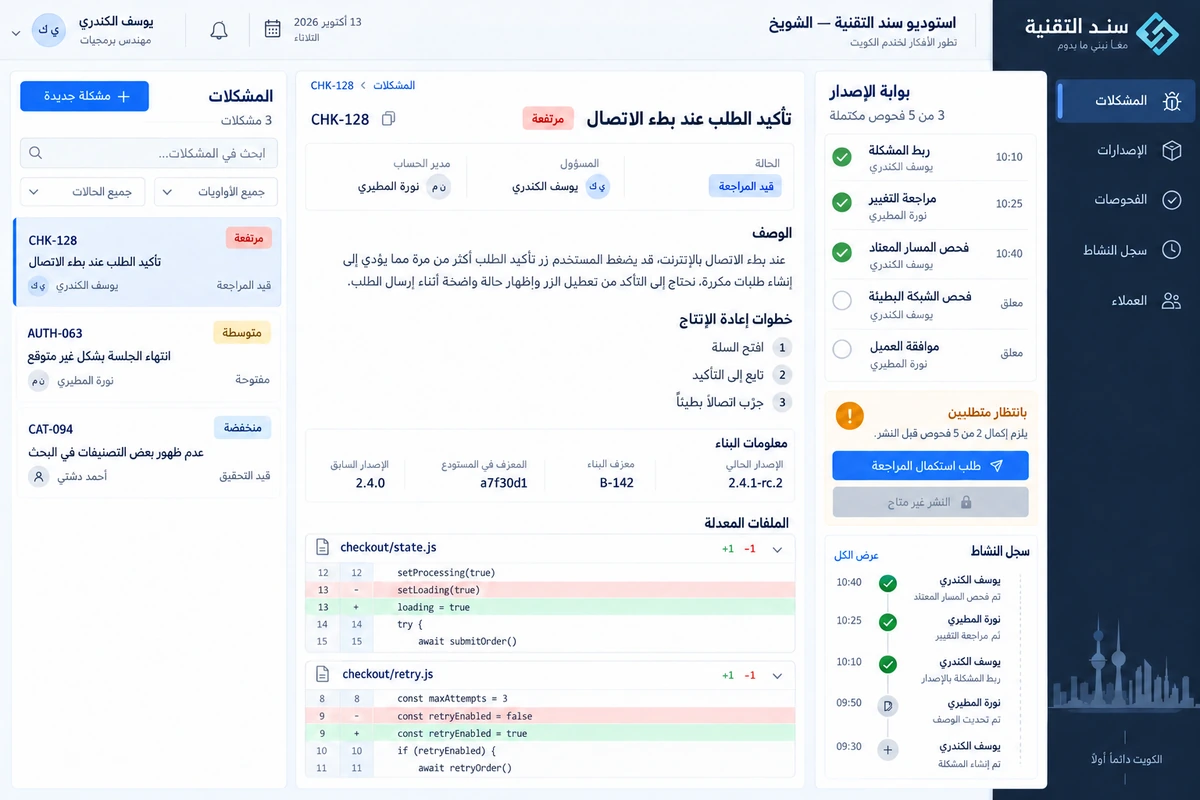
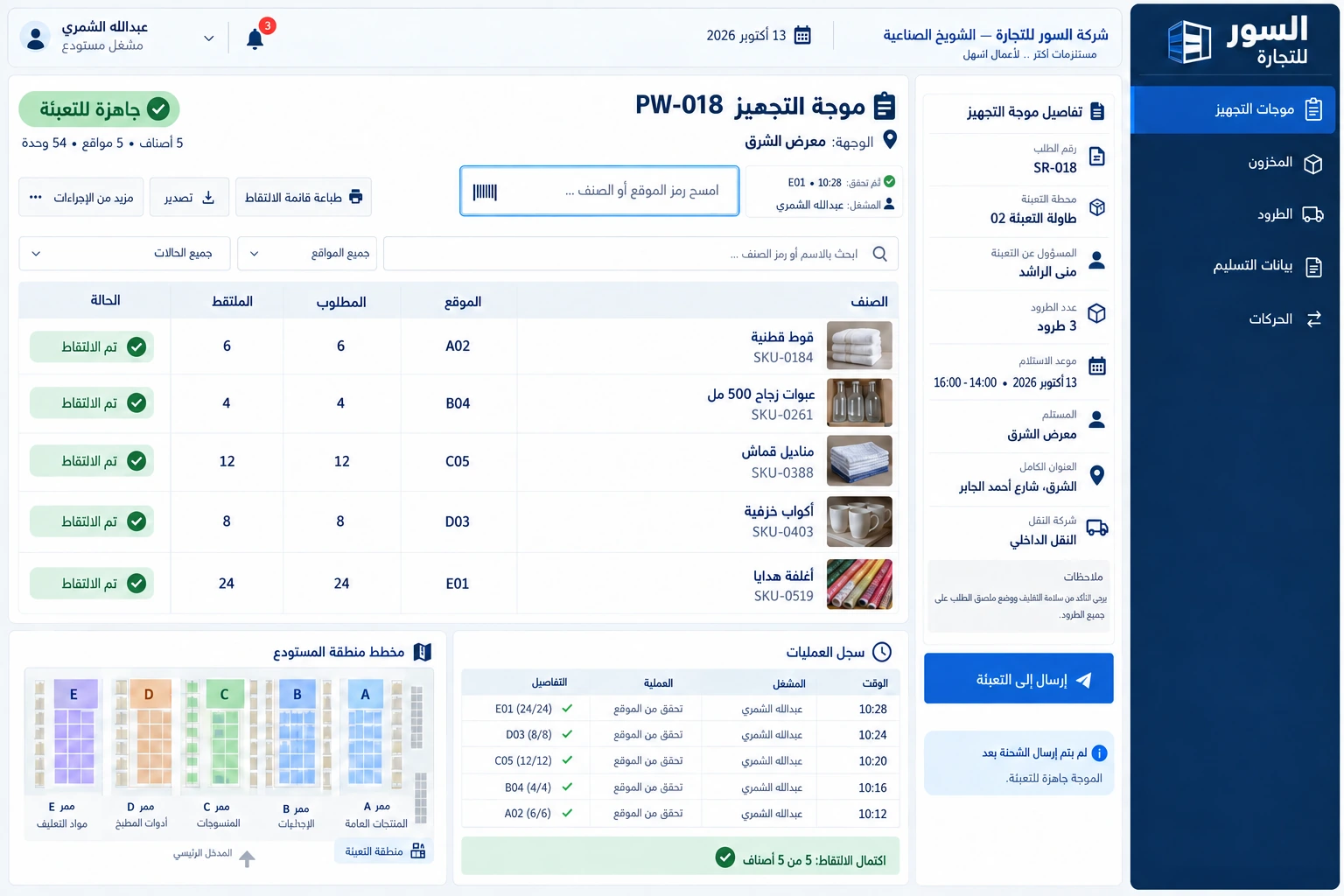
Moving between sales orders, picking sheets and shipment paperwork allowed quantities or lines to change without explanation. A blue warehouse path did not show whether an item was picked, packed or dispatched. We defined each stage, kept requested quantities visible and separated parcel-label checking from confirmed departure. Packing staff also needed the full destination, time window and carrier.
02 / The solution we designed
The solution we designed
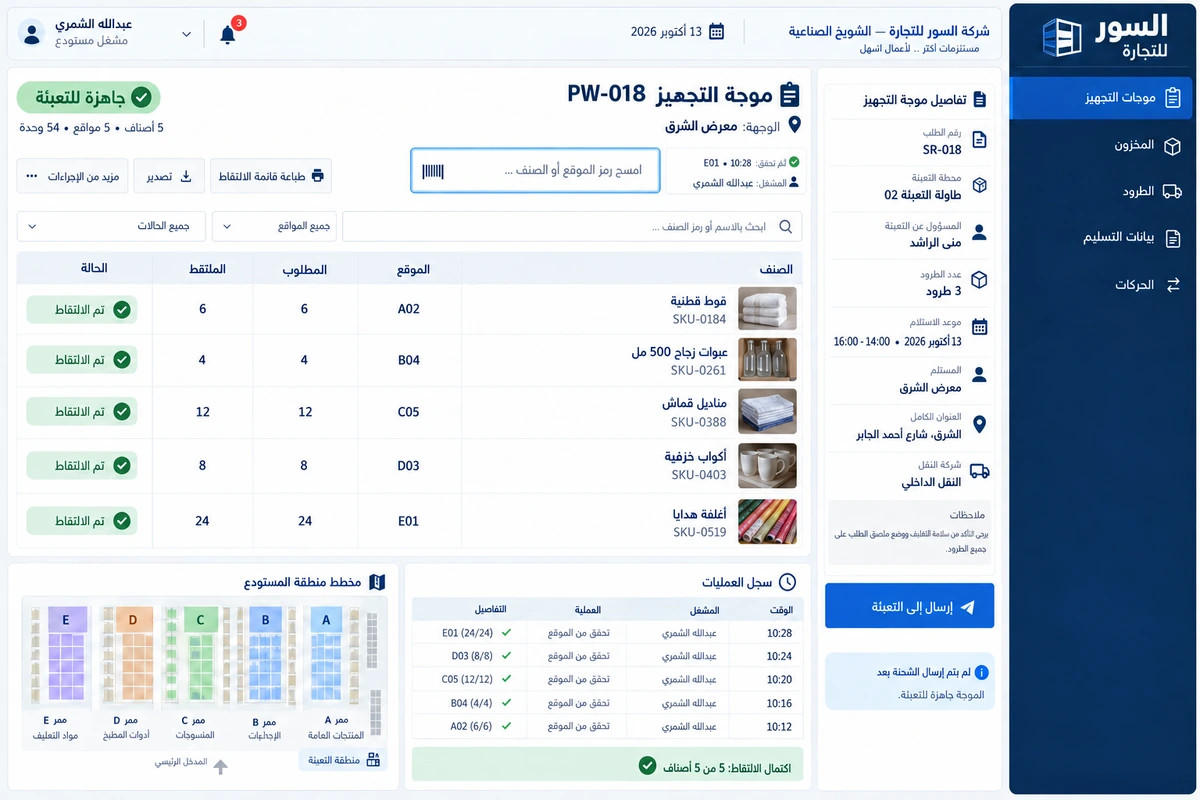
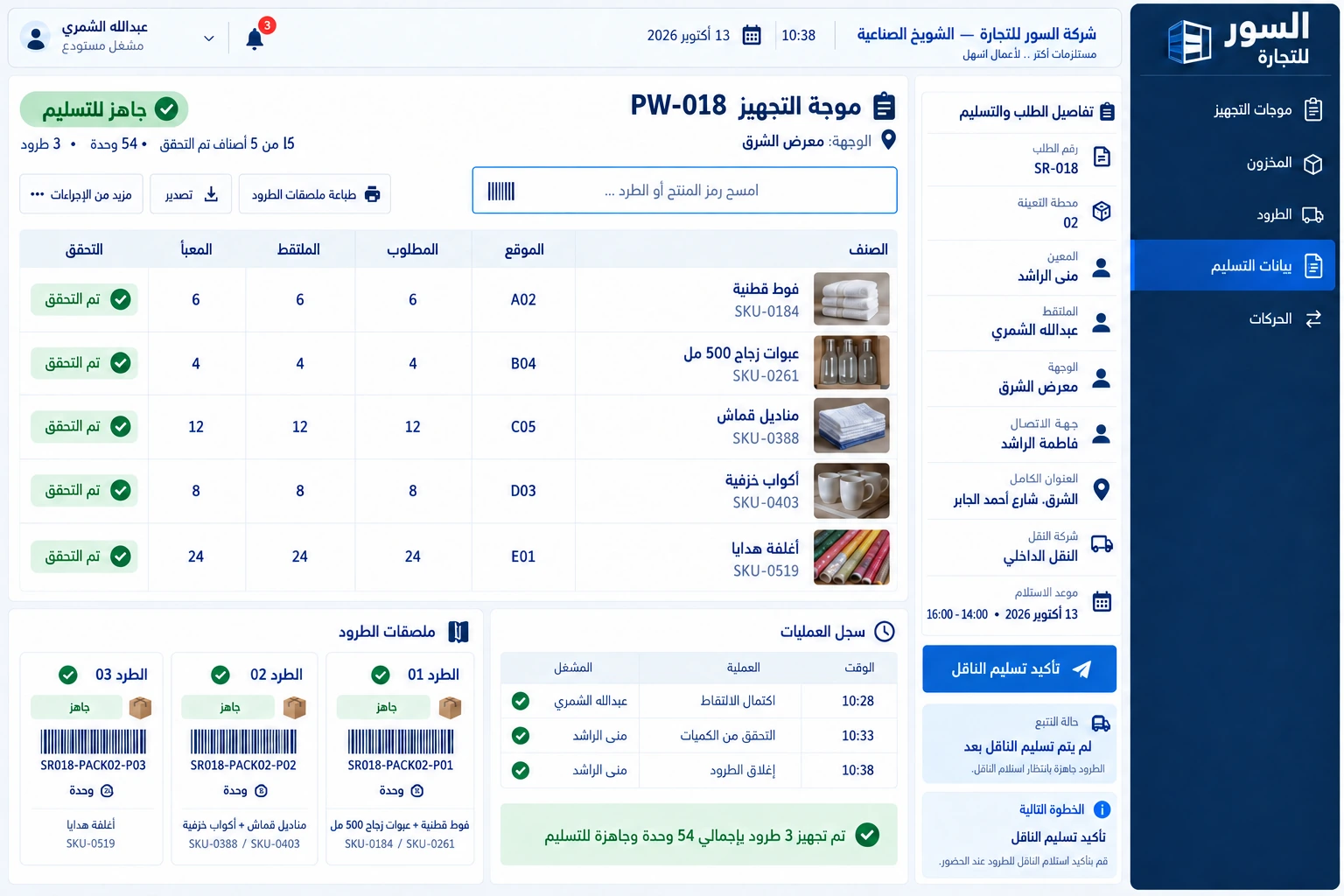
The example wave contains five items in five locations, totaling fifty-four units: six towels, four glass jars, twelve napkins, eight cups and twenty-four gift sleeves. The same quantities flow into the packing manifest, with no seven-line heading over a five-line table. Each shelf code appears beside its item; a small keyed location diagram is only supporting context. Three parcels go to a Sharq recipient in a defined collection window.
03 / The experience
The experience
Picker Abdullah Al Shammari opens the wave and checks a location code before confirming an item. At packing, Mona Al Rashed compares requested, picked and packed columns line by line. Five of five verified makes the shipment Ready for handoff, not already dispatched. She reviews the Sharq showroom's Ahmad Al Jaber Street address, collection window and carrier, then checks the third label. Carrier handoff is a separate action recorded with its owner and time.
04 / What it could do
What it could do
Traceable quantities
Connect requested, picked and packed counts and reveal differences before closing the preparation list.
Understandable shelf locations
Keep shelf code with item and quantity, without unsupported measurement or coordinate claims.
A complete manifest
Combine items, parcels, recipient, address and collection window while preserving the same unit total.
Documented handoff
Separate label review from dispatch and record the owner, time and carrier for the final step.
05 / A typical journey
A typical journey
Open the wave
Abdullah checks five items and five locations before following the shelf codes.
Match quantities
Mona verifies fifty-four units against the requested, picked and packed columns.
Review parcels
She checks three labels and reads the destination and carrier collection window.
Confirm handoff
The owner records departure only after the real handoff, retaining its time in the manifest.
06 / Inside the interface
Inside the interface
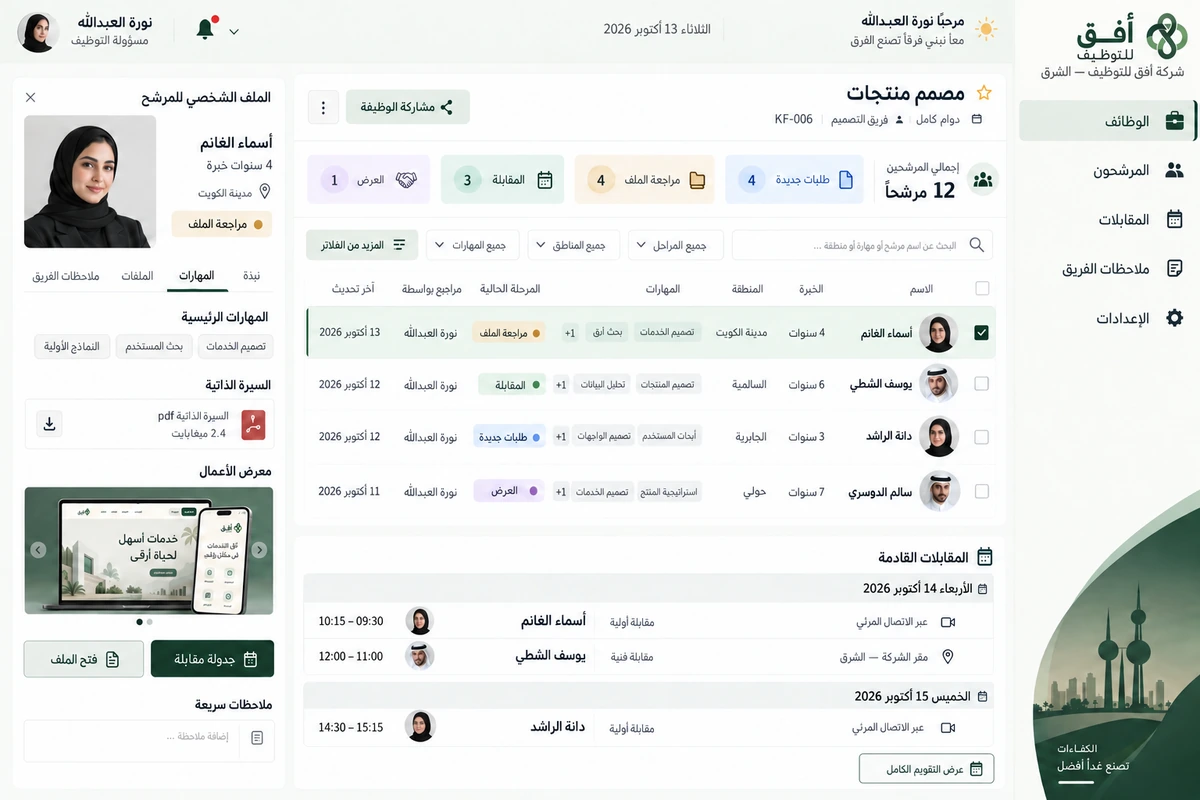
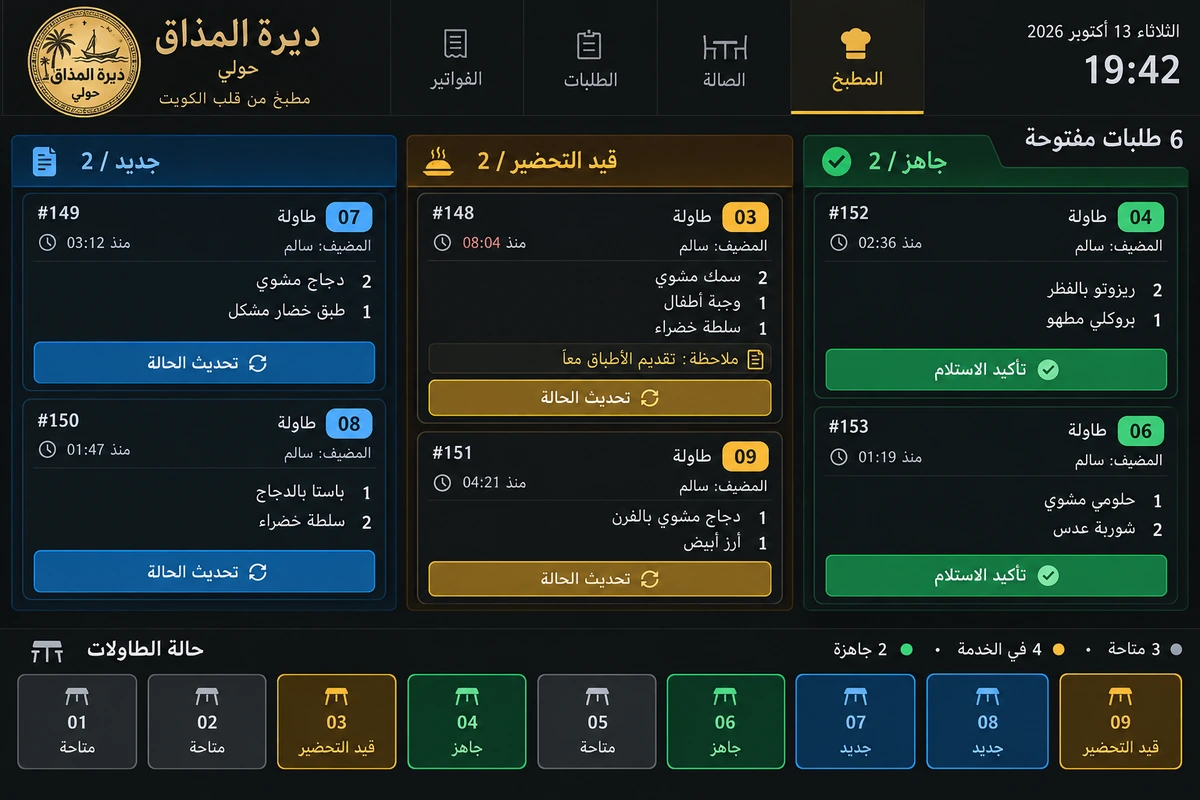
Arabic interfaces with right-to-left reading and sample workflows set in Kuwait. Open the images to explore the details.
Explore the screens.
Open any screen to explore the complete project gallery.
07 / Design direction
Design direction
Industrial blue, clear white, a wide table and a shelf-unit Arabic mark give Al Soor Trading its own identity. Figures, fields and verification states have the density of a real warehouse tool. Picking and packing screens arrange different work but share codes, items and quantities. Decorative maps and generic performance graphs give way to information about the item, parcel and person responsible for the next action.
Discuss a similar idea