Furniture and collectible auctions Design concept
Mazad Al Dar
An Arabic auction identity that brings condition, bids and collection terms into one coherent product.
We designed Mazad Al Dar as a fictional Kuwaiti client study for a curated furniture and home-object business in Shuwaikh. Its premise was straightforward: an auction decision needs information about the object before it needs a bidding button. We connected photographs, condition reports and dimensions to a clear bidding record, within a restrained Arabic identity that respects the objects.
Client in the design study
Dar Curated Furniture
Shuwaikh, Kuwait
Project brief
A fictional client for an Arabic furniture and collectible auction with structured object details and clear collection.
Design scope
- Arabic identity and photographic direction
- Live auction room and bidding history
- Lot detail, condition report and collection terms
01 / The project challenge
The project challenge
The scenario began with beautiful object photographs but separate messages about dimensions, materials and collection. Participants could mistake the offer for an inclusive delivery price, or assume that opening the page reserved the object. We addressed the distinction between the current amount and minimum next bid, including three-decimal Kuwaiti dinar values, while keeping the session closing time beside the bidding action.
02 / The solution we designed
The solution we designed
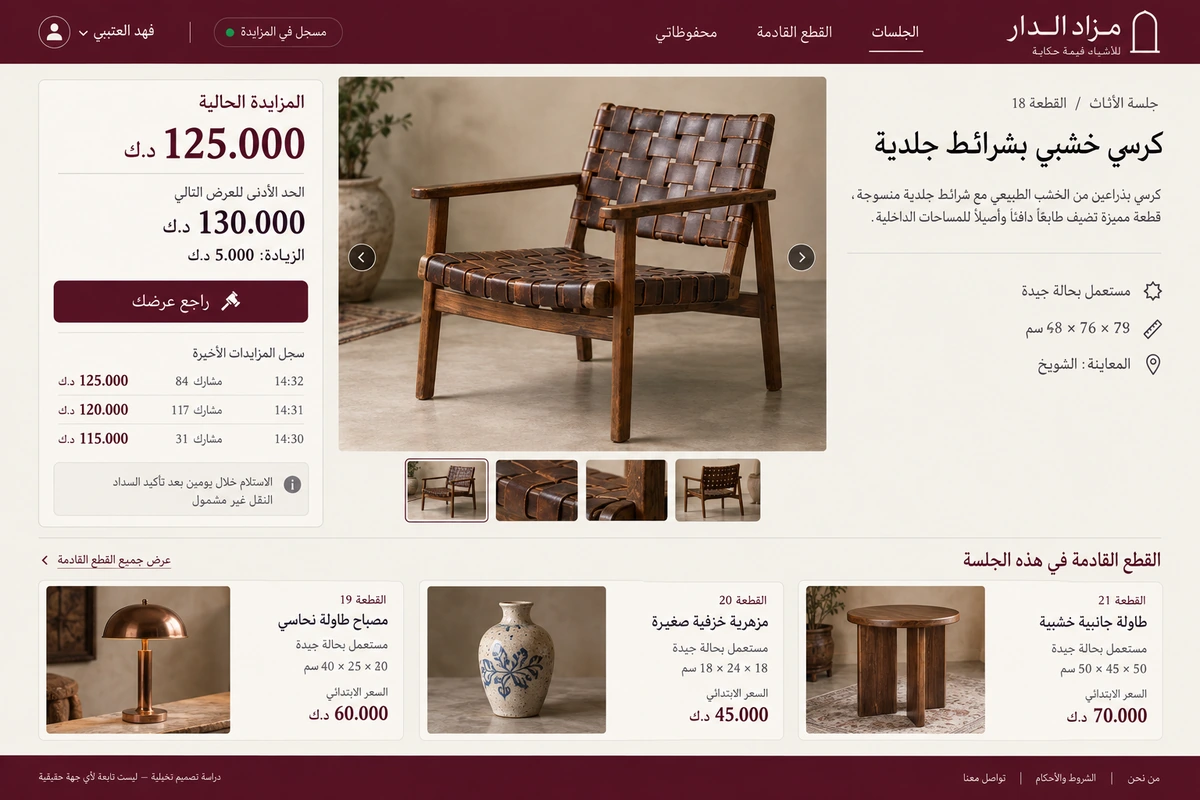
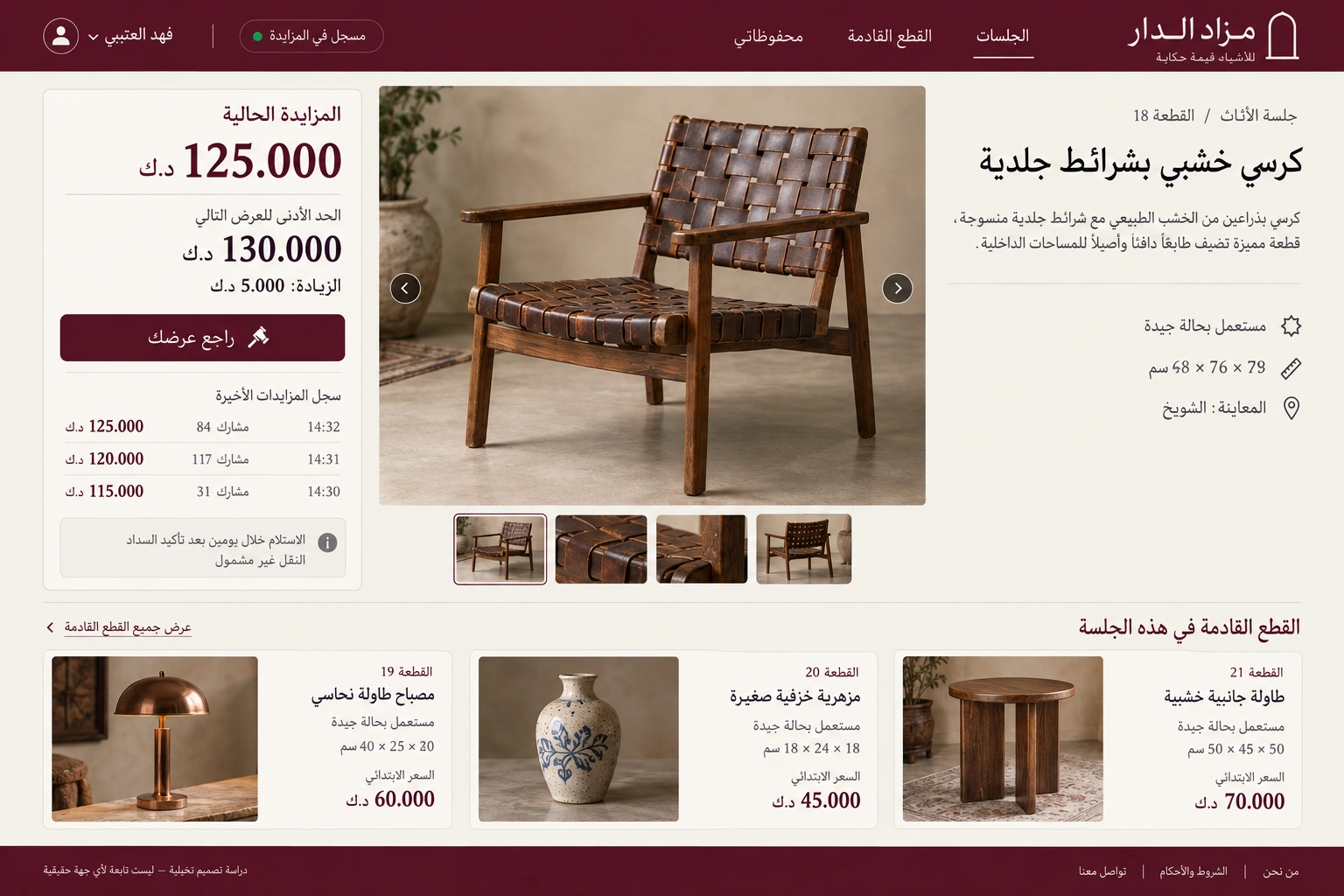
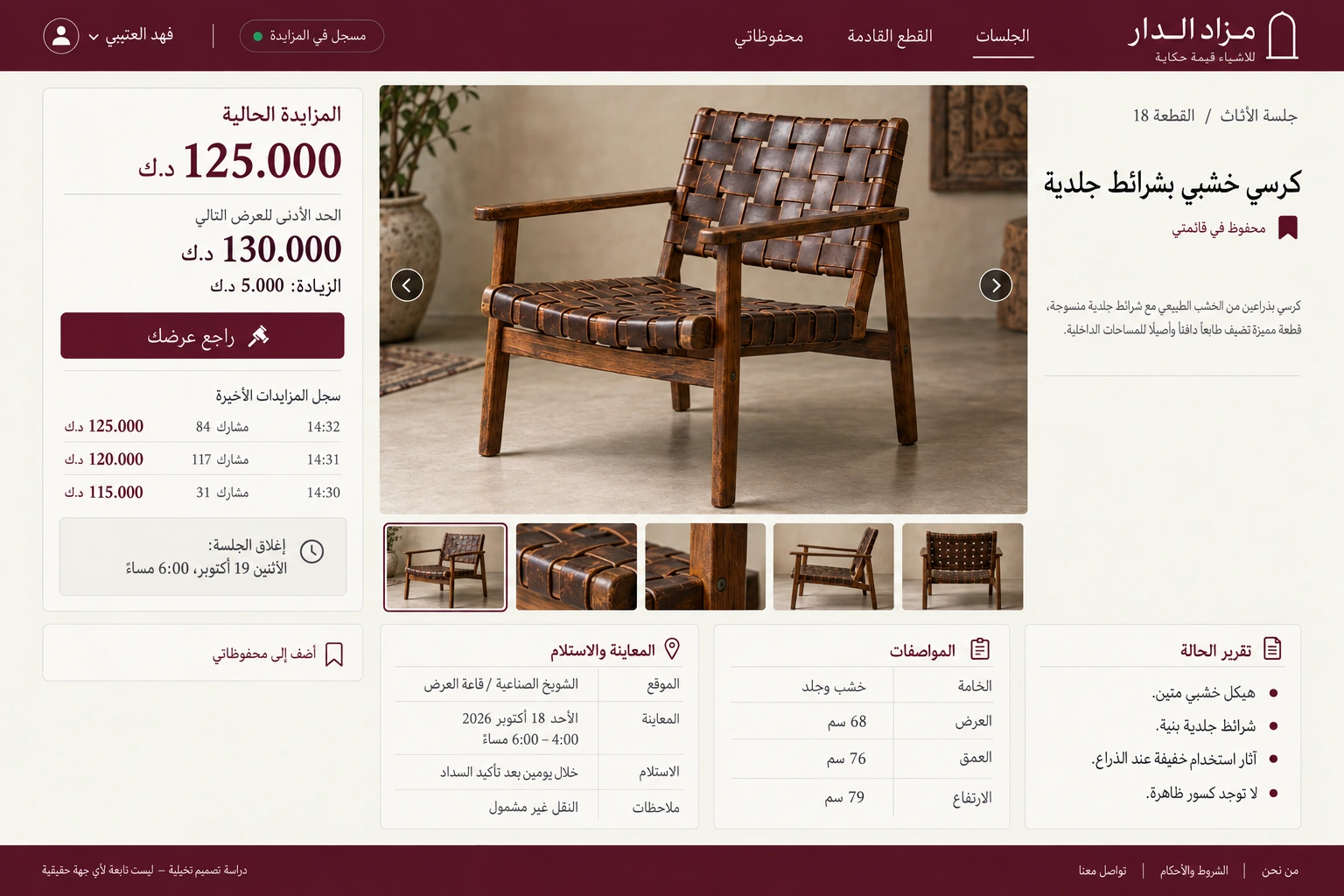
The live room centers on a specific object rather than a wall of counters. A large chair photograph sits beside its condition, current amount and required increment. The detail view brings a closer photograph, dimensions and an explicit description of wood and leather straps together with timestamped bids. Transport responsibilities and the viewing location remain separate from the object price, preventing ambiguity at collection.
03 / The experience
The experience
Fahad Al Otaibi follows the furniture session from Mishref and opens lot 18: a wooden chair with leather straps in good used condition. Viewing is in Shuwaikh, and collection follows payment confirmation within two days. Three bids of 115, 120 and 125 KD lead to a next bid of 130 KD, a five-dinar increase. Before proceeding, a review explains the amount, session terms and registration requirement.
04 / What it could do
What it could do
Readable condition reports
Condition, visible wear, materials, dimensions and included contents are grouped before the bidding step.
Reviewable bids
The current amount, required increment and next bid form one sequence, with a distinct review before confirmation.
Timestamped history
Bidder identifiers and times explain how the price changed, separate from buyer messages.
Clear collection terms
Viewing location, collection deadline and transport responsibilities stay near the condition report and price.
05 / A typical journey
A typical journey
Choose the object
Enter the furniture session and open a specific object with an image and reference number.
Inspect its details
Read dimensions, materials, condition and viewing information before deciding on a value.
Review the bid
Compare the current and next amounts, then read the increment and closing time before confirmation.
Plan collection
A separate payment and collection path preserves the transport and viewing terms for reference.
06 / Inside the interface
Inside the interface
Arabic interfaces with right-to-left reading and sample workflows set in Kuwait. Open the images to explore the details.
Explore the screens.
Open any screen to explore the complete project gallery.
07 / Design direction
Design direction
Burgundy and ivory paper support a readable editorial Arabic type system. The Mazad Al Dar mark combines a doorway outline with a balanced wordmark. Photographs appear in an actual browser interface rather than device frames or decorative 3D scenes. Type size follows decision importance, while lightly ruled tables and consistent spacing preserve a clear RTL sequence without reversing the numbers inside prices.
Discuss a similar idea